NewSchool of Architecture & Design

Check out our Design & Build Summer Intensive Program for Ages 14-17 here!

DesignMind: Reflections on a Design Life

DesignMind: Reflections on a Design Life

On April 22, the College of Design at NC State University moved me deeply by honoring me with their Designlife Award. It is an award I helped create 20 years ago as dean of that college, but I never thought of being a recipient.

I grew up in a small town. My father operated a Mobil garage and service station. He was a mechanic who never quite knew what would come through his door for repair work on any given day. I realize now that he was a creative spirit who thrived on invention. We lived next door to the garage. I like to say that I grew up under the sign of Pegasus because it was the tallest thing on our property.

I worked in my father’s service station from about the time I could walk. One summer in particular, everything needed to be changed. It was a moment I remember because the impact of design first became evident to me. We were told that Mobil was undergoing a “face lift”—even the flying red horse changed directions—and we had to conform.

Later, when I was a student at Harvard, Eliot Noyes came to speak. I was excited. He was, along with Chermayeff & Geismar, the architect of that “face lift.” His presentation confirmed for me the importance of that early moment in my design consciousness. Even from within the context of that small-town service station I felt the power of design. It is an inspiration that led me to teach design thinking for more than 20 years.

The Designlife Award recognizes “the practice of good design as a sign of good citizenship.” The importance of citizen architects and designers is something I believe in strongly. It means being part of a community first, understanding its context, place, and culture. I was very fortunate to be part of the NC State community for 22 years, just as I am now fortunate to lead NewSchool’s.

As I was growing up, my mother taught me that the strength of a community is in its ability to think in diverse ways by regularly reminding me that “if everybody is thinking alike, nobody is thinking very much.” I see the Designlife Award as encouragement to keep the design of life as a priority. My imagination is inspired by what is yet to come.

NewSchool President Marvin Malecha Presents “Educating Architects in Sustainability” on February 18

President Malecha is the keynote speaker at this weekend’s Friends of San Diego Architecture Saturday Morning Speaker Series, hosted on the NewSchool campus

For more than 30 years, the Friends of San Diego Architecture has been hosting a Saturday Morning Speaker Series, open to the public. NewSchool of Architecture & Design (NewSchool) is proud to host this inspiring public lecture series on its campus, located at 1249 F Street in San Diego, every third Saturday of the month.

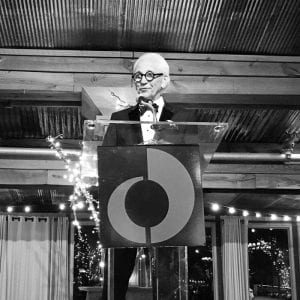
This weekend on Saturday, Feb. 18, at 8:30 a.m., NewSchool President Marvin J. Malecha will be the keynote speaker. His presentation, “Educating Architects in Sustainability,” is focused on preparing design minded learners to become citizen architects and designers, who employ sustainable and regenerative practices in the development of the buildings and artifacts of life.

The presentation will also include a discussion of the nature of a design education, the context design decisions and examples of work from architects and students. This includes an energy-related design project and presentation highlighting the importance of international travel to inform comprehensive and inclusive design practices.

“Nature is certainly among the paramount influences on the work of an architect,” said President Marvin J. Malecha, NewSchool. “However, it’s important to understand the influence of culture upon how the human mind perceives the influence of nature. My hope is to underline this notion during my discussion and for attendees to leave with a new outlook on architecture and design.”

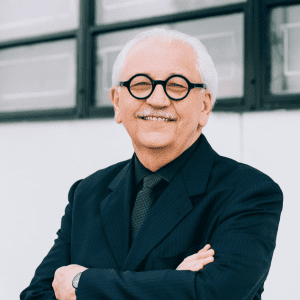
President Malecha has more than forty years of experience in academia, architecture, and global design education. He was recognized as the 1980 Rotch Traveling Scholar and has continued receiving many prestigious awards and honors throughout his career. These include an honorary membership in the European Association for Architectural Education; the Distinguished Professor Award in 2002 from the Association of Collegiate Schools of Architecture (ACSA); and, the Topaz Medallion for Excellence in Architectural Education in 2003, awarded jointly by the AIA and the ACSA. He was inducted into Sigma Xi, the scientific research society, in 2006; and, in 2009 served as President of the AIA. He has also authored many books and articles; the latest is Being Creative: Being a Creative (June 2015). To complement his administrative responsibilities, he teaches courses on critical thinking and professional practice. He also maintains an architectural practice in association with others.

For more information on President Malecha, visit newschoolarch.edu or check out his President’s Blog.

For more information on NewSchool of Architecture & Design or to interview President Malecha, please contact Rachael Lighty at rlighty@newschoolarch.edu.

About NewSchool of Architecture & Design:

Located in San Diego’s design district, NewSchool of Architecture & Design prepares students for career success in design fields through an emphasis on interdisciplinary and global design skills, industry collaborations and real-world projects. Programs include architecture, construction management, product design, media design, design studies, and interior architecture and design. NewSchool is accredited by the Western Association of Schools and Colleges Senior College and University Commission. NewSchool’s Bachelor of Architecture and Master of Architecture programs are accredited by the National Architectural Accrediting Board (NAAB). NewSchool is one of more than 70 institutions in 25 countries that comprise the Laureate International Universities network. Through collaborations with sister institutions in the Laureate network, including Domus Academy in Milan, Italy, NewSchool students are prepared to work in global and diverse organizations. For more information, visit www.newschoolarch.edu

DesignMind: Lecture on Feb 18 Educating Architects

For 30 years, Friends of San Diego Architecture has been presenting inspiring lectures and community-centered conversations about our built environment. We are proud to host their meetings and public lectures every third Saturday of the month on the NewSchool of Architecture & Design campus.

On Saturday, February 18, at 9:30 a.m., I have the privilege of presenting to this group about “Educating Architects in Sustainability.”My presentation will include a discussion of the nature of a design education, the context of design decisions, and examples of work from architects and students. This includes an energy-related design project and a presentation about the importance of international travel for informing design practices.

Whether you are practicing architect or designer, aficionado, student, or someone considering these professions, this is a wonderful opportunity to learn about what it means to be a Citizen Architect or Designer who employs sustainable and regenerative practices in the development of the buildings and artifacts of life.

The event is free for students, and a suggested donation of $5 for all others. I look forward to seeing you there.

DesignMind: The Importance of Citizen Architects and Designers

At NewSchool, we believe in human-centered design—a problem-solving process that starts and ends with people. To be successful at that, our students learn to be Citizen Designers and Citizen Architects while they work on their studies as an architecture major.

Citizen Designers are members of a community first before they are students of design degree. They understand its context, its place, its culture. They take part in its democracy by interacting with government, community groups, and planning boards, as well as volunteering with nonprofit organizations. They do everything from sponsoring a Little League team to taking part in the discussion of what a city should look like over time. They are part of the lifeblood of the community. And as you would expect of a responsible citizen, they undertake projects that benefit the welfare of the community.

They also interact with their community as designers. They are not a “troubled genius” who swoops into a city, cape flying behind them, to plop down an ego-driven artifact and leave, never to be seen again. The Citizen Architect’s goal is to leave behind a project that considers the people who will live and work in that building. The Citizen Architect asks, What is the impact of this building on the greater context of our community?

One of NewSchool’s many champions for the concept of Citizen Architects is Mike Stepner, chair of our architecture programs, so I asked him to share some examples from the work he does with students in San Diego. Here’s what he told me:

“One of the things we have done at NewSchool since its founding is engage students in projects that are real—that have a client that is part of the community. The city often requests that students look at projects and issues, and then offer a proposal. We are an urban laboratory for the city.

“For example, Balboa Park is the heart and soul of the city. Years ago the school was asked by a former mayor to take a look at a lot of issues that were in the park and the students came up with some ideas in a broad based report that is still being used. A few weeks ago, I was asked to go to a meeting of the public-private Balboa Conservancy to re-present the student work to new members because they are using it as a wish-list of things they’d like to do.

“Another example is Mission Valley. We spent a year with three classes working on recommendations for this area, which was developed in a haphazard way. Our final review of the work was held in the office of a newspaper. That work is relevant again with media and government officials because of the Chargers moving from San Diego to LA. It is another example of how the work we do in class has a long life.

“In my studio class, we just completed in December two studies: one for Mira Mesa, which is a 1960s-70s suburban area that is ripe for change, and one for the area around San Diego State University at the request of the City of San Diego Community Planning Group. That planning group has requested a digital copy for their website and for the students to present at board and community meetings. For both, we were asked to come up with ideas. We forwarded our work to the city, and it becomes part of the city’s resources for what they want to do in the area.

“Another project was North Park, an older neighborhood. Our students did an urban study of the business strip, which has been used by the business improvement district. Many students have remained involved and there were grants for further studies and many continue to volunteer. They got hooked in class and stayed with it. I run into former students at community meetings all the time.”

The stories of the student learning experience are rooted in a project-based process. This way of teaching causes students to confront the most fundamental issues and needs of people through the section of projects that address community needs. The values imbedded in such a process lay the foundations for careers focused on benefit to the greater community. This is the process by which the notion of Citizen Designers and Architects evolves.

At NewSchool of Architecture & Design, we offer a wide range of degrees in architecture, design, construction degrees, and management. Contact our Enrollment Team today to learn about a degree program for you.

DesignMind: Exploring the Neuroscience of Design

“We shape our buildings, and afterwards our buildings shape us,” Winston Churchill* said during the debate over how to rebuild the Commons Chamber after it was destroyed during WWII. Some wanted seating in a horse-shoe design, but with Churchill’s approval, the original adversarial design—with opposing debaters facing each other two sword-lengths apart—was retained as a reminder of the importance of a lively but civil two-party system.

Space and human behavior are intertwined. Understanding neuroscience has everything to do with becoming human-centered designers. It means focusing on people as they are rather than on an idealized image of who they should be. It is coming to understand the nuances of how the mind works and how cognitive experiences can be used to shape architecture, from the simplest wayfinding to complex issues of spatial composition.

On January 25, NewSchool is hosting a public lecture with Colin Ellard to further our thinking about the intersection of architecture and psychology. He joins us from the University of Waterloo in Ontario, where he uses environmental psychology, virtual reality, and other tools to help us understand the impact of urban design on human behavior.

What I hope our students and others in attendance will understand is that design is underpinned by evidence, with a body of literature and knowledge. It isn’t just what comes off the top of their heads. Design is influenced by information and science that should inform a designer as they start making choices that affect how people live, work, and play.

NewSchool will also offer Neuroscience for Architecture from August 14­–17 as one of its intensive course options during our Summer Intersession 2017.

*https://www.parliament.uk/about/living-heritage/building/palace/architecture/palacestructure/churchill/

DesignMind: Why International Experience is Essential in Design Education

International experiences are often considered an “extra” in higher education. In design education, an international experience is essential for graduates to build their careers.

Even if you stay in San Diego after you graduate, you will interact with people from many cultures and in all likelihood will design for people in other countries or with funding from interests outside the United States. Even small firms are practicing around the world, thanks to technology. Employers are looking for people who are internationally savvy.

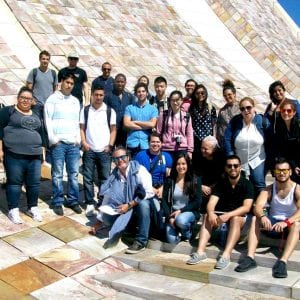
One of many examples of international opportunities at NewSchool is COMPOSTELAs, which is organized by Tatiana Berger, a faculty member with more than 20 years of international experience. This summer program is an intense three weeks in Santiago de Compostela, Spain, a UNESCO “World Heritage City” known for its architecture. Students attend lectures, tour nearby Galician cities and Porto, Portugal, work with iron and granite with local masters in materials ateliers, and create a design project for the city. In addition to meeting the Mayor of Santiago de Compostela, students visit with the Pritzker-Prize winning architect, Alvaro Siza, in Porto. They also get to see architecture shaped by different cultures, environmental forces, and time periods.

COMPOSTELAs is a fun immersion experience for students, and it may also make them more employable after they graduate.

You can learn more about COMPOSTELAs at an exhibition of student work created during the last trip on Friday, January 13.

DesignMind: Reflections on Billie Tsien’s NewSchool Lecture

At NewSchool, we are extremely proud of our Lecture Series, which brings world-renowned guest lecturers to campus as part of our mission to enhance global design education opportunities for both our students and the local community and design industry. Last month, we were fortunate to have Billie Tsien, an internationally acclaimed architect who, with her husband, Tod Williams, was recently selected to design the Obama Presidential Center in Chicago.

I have known Billie for a long time, which has allowed me to see her work since the early days of her career. Consistent throughout is her deliberate and careful approach toward the process of architecture. There is a strong tendency in her process to listen and observe deeply before coming up with a design concept. That notion of deep understanding pervades their work.

Many times people will get a commission like the Obama library and within weeks you see them promoting some grand project. That work is often superficial and self-congratulatory. Billie’s work has a thoughtful, deep understanding of a place. It has an amazing tactile quality because it is about craft, material, texture, tone, and color. The real architecture of Billie and Tod’s buildings is how you touch it and how you interact with it. It has an intense humanity. Billie mentioned to me that Michelle Obama very much had it in mind that the library must enhance the life of everyone who comes to the park, not just those who visit the building.

I asked a few of our faculty for their reflections on Billie Tsien’s lecture:

Tatiana Berger, Associate Professor, Graduate Architecture, and Chair of the NewSchool Lecture Series Committee:

“As both an educator and leader in design, Billie displays a deep commitment to making the world a better place through architecture. She has a poetic approach to architecture, and her voice and influence is one we deeply value in educating our students.”

Elena Pacenti, Ph.D., Chair, School of Design:

“Billie Tsien walked the audience through a sophisticated journey about beauty and design: that territory where beauty is not just something aesthetically pleasing but comes from the meaning that people recognize behind every design choice. Her words perfectly complemented the visual power and poetry of the images of their work. I’m really glad that Billie’s lecture opened the academic year: “Inside Out”—where all dimensions and scales of design seamlessly blend—was the perfect keynote to celebrate the rounded, interconnected, human-centered design culture we promote at NewSchool through the dialogue between the School of Architecture and the School of Design.”

Kurt Hunker, FAIA—Graduate Architecture Program Chair:

“What was eloquently on display in Billie’s words and images is an approach to architecture and design that counters the superficial contemporary fixation on ‘starchitects’ and icon-makers in favor of a much more meaningful, nuanced response to program, client and context our students would do well to emulate.”

Leonard Zegarski, AIA—Undergraduate Architecture Program Chair:

“Only one word is needed: Inspirational! Her work lifts architecture out of the mundane and everyday that surrounds us. The work she produces meets any definition of architecture as proposed by either Louis Kahn or Le Corbusier. It ‘touches the heart’ after Cobu and ‘it is the thoughtful making of space’ after Kahn.”

Michael Stepner, FAIA, FAICP:

“For me the important messages were that words matter. Architects and designers must be able to convey their thoughts and ideas to others—and enter in to a dialog. And that we must as architects and designers be able to make connections to the broader context—not just architecture.”

What did you think of Billie Tsien’s lecture? Who would you like to see speak at NewSchool?

DesignMind: Connecting Humility and Mastery for Our Students

In November, we were incredibly fortunate to continue bringing to campus world-class lecturers who are architecture masters and, despite their success, masters of humility. You can see it in their world-renowned work, and in the time and advice they shared with students in campus-only sessions. Perhaps because they are so good at what they do, they know how difficult it is to do great things, and they are humbled by the process.

Rick Joy’s work is most associated with the American Southwest. His firm in Tucson, Arizona, has completed exceptional desert resorts and residences that almost disappear into the landscape rather than standing out in the starkness. They are a demonstration of the deep humility he has for the context of his architecture.

Stephen Emmitt is an exceptional educator, and head of the Department of Architecture and Civil Engineering at the University of Bath, UK. His lecture spoke to the creativity in the process of bringing architecture to life through construction management—especially when there is a focus on the importance of people and what they bring to the table from their different vantage points.

It truly is a wonderful perk of the NewSchool community to interact with these speakers. Our goal with the lecture series and seminar sessions is to bring our students into contact with very accomplished people who know it is not about ego; it is about empathy and bringing talents to the table to make places for people to live and work and worship that are beautiful and human-centered.

DesignMind: NewSchool’s Northern Star – Human-Centered Design

For thousands of years, the Northern Star has been a bright and fixed point for travelers on their journeys. A Northern Star can also be a metaphorical guide for organizations as they journey toward their own desired destination. A north star aspiration is important because it brings clarity to what can otherwise be a diverse community of opinions about the world. It brings focus to student and faculty scholarship and differentiates us from other architecture and design schools. At our convocation in October, I revealed NewSchool’s Northern Star: human-centered design. This assertion did not come superficially. Rather it has evolved out of a history of concern for the human experience and the responsibility for human welfare in the design of buildings, media options and artifacts that define our experience in the world.

There are many interpretations for the definition of human-centered design, and a vigorous discourse has begun among students at faculty within the NewSchool community. That observed, it is agreed upon that human-centered design is a problem-solving approach that starts and ends with people. Designers immerse themselves in the needs and challenges of people who will experience their project so that they gain a deep understanding and empathy. It is a creative and collaborative process that involves brainstorming and rapid, iterative prototyping to bring an innovative and successful project to life—for people.

Our focus on the human experience in all that we do comes after much vital discussion with our faculty that extends beyond my nine months as president to my time on the board of directors. Human-centered design is the primary organizing thought that pins our efforts to a deeply held value for architecture and design. We will emphasize that our students be “citizen architects and designers” who are keenly focused on the experience of those who will live, work, and worship with the result of the efforts of architects and designers.

We are so committed to this that we are creating a new organizational structure. We have clarified our design offerings by organizing the study of design into product, media, interior design, interior decoration, architecture, and design studies into a School of Architecture and Construction Management and the Domus Academy School of Design. We have also reconsidered how we perceive general education and are directing our efforts toward Integrative Studies. This supports the notion that general education in a design school is an opportunity for inter- and cross-disciplinary study as well as critical and creative thought. These efforts support the pillars that underlie our curricular experience: professional practice, environmental empathy, human welfare and community engagement. These pillars are further emphasized in the scholarship of faculty gathered around four affinity groupings including: design and practice, design and strategy, design and environment, and design and health. Ultimately it is through the scholarship of faculty and students that we will be known. We wish that reputation to be built upon that which makes us
human and that which we as designers can amplify to make our humanity even more visceral.

At NewSchool, human-centered design also means designing programs centered on our students. Through our new Center for Academic and Student Success, we are investing in programs and services to enhance the learning experience for all students. This includes:

  • A Commitment to Service program that will encourage students to be citizen architects and designers who address the needs of people in our communities.
  • Our Green. By Design. initiative, which builds on our longstanding commitment to sustainability by encouraging theconscious use of resources and environmental systems.
  • A Graduate Student Council to address the specific needs of this growing population.
  • The Project Lead Initiative, which will offer a variety of opportunities to help students identify and develop their leadership skills.
  • A Faculty Advising Initiative to foster greater interaction between students and faculty to assess degree progress, as well as mentoring to prepare for professional practice. A peer advising program will complement faculty advising by connecting new and senior students.
  • The Writing Initiative recognizes that writing skills, especially in one’s discipline, can be learned through practice and that they are a tool for learning and processing information.
  • An initiative to Increase International Student Focus to improve awareness about the value of our multicultural student body, faculty and staff through activities and events.

These are ambitious programs, but guided by our mission, vision, and values, as well as our Northern Star, we can achieve them.

Construction Management Career Path Options

What is Construction Management?

Construction management is the process of overseeing building projects. As a construction project manager, your roles would be to lead each construction worker on different projects and manage each construction site. Leading construction projects can take time and require extensive work experience, so it is important to understand the construction process and project management skills. If you consider yourself a leader and want to work in this field, then this may be the career path for you. There are so many careers in construction management you can explore.

Exploring Careers in Construction Management

Now is a great time to get the ball rolling toward a career in construction management by getting your bachelor’s or master’s degree! However, let’s take a step back to see the construction management career path and job opportunities. Construction management careers offer great job stability and the potential for a high salary. With a career in construction project management, you’ll help build and shape the world around you one structure at a time, and make a real impact that you can see.

So, if you’re interested in joining the construction industry, your next question might be about the possible career paths for a construction manager and how to become a construction manager.

How to Become a Construction Manager

Wondering how to become a construction manager? The simple answer is that there are many different directions you can take a construction management career. Just think of all the different kinds of structures that need to be built: homes, skyscrapers, bridges, schools, local bars and restaurants – you name it! Construction managers will be behind them all.

And while there are different types of construction managers for these different kinds of structures – like specialty trade contractors, nonresidential building construction, residential building construction, heavy and civil engineering construction and more – they all do essentially the same thing: manage the construction of the project.

Just like any other job or profession, construction managers will typically have an area of expertise and jobs may require a certain amount of years of experience to apply. However, being a construction manager is much more than just planning a structure and moving on to the next one once the project is complete. Construction management involves many different professional skills, everything from the planning, designing, budgeting and applying construction experience to oversee the successful completion of both small and large-scale construction projects.

Since these parts are typically interrelated, construction managers can have several different roles before, during, and after a building project. This means there are several different options available for those who wish to enter the construction management field. If you love building, creating and/or maintaining structures, take a look at a few of the possible construction management career paths below.

Five Careers in Construction Management

1. Building Surveyor

The primary responsibility of a building surveyor is to submit reports called building surveys. These detailed reports include advice and recommendations on building defects, dilapidation, necessary repairs, preventative maintenance issues, the sustainability of the structures, suggestions for restoration, and upholding local building regulation laws.

Essentially, they make sure every detail of a building’s construction is up to snuff. Individuals who are interested in becoming a building surveyor should be problem solvers who would enjoy fixing any defects to a building’s construction. They must be detail-oriented and enjoy building design and yes, legal codes.  

2. Building Services Engineer

Building services engineers uphold the maintenance portion of a construction project. A building service engineer will make sure a building functions as it should, and be able to design and install improvements where necessary. A building may need services to its acoustics, security, lighting, power, heating and cooling, safety, and more. The building services engineer should be able to tackle all of these issues while keeping sustainability and renewable energy in mind.

3. Facilities Manager

Facilities managers often have more of a behind-the-scenes role, but one that is necessary to keep an organization running. A facilities manager has a wide variety of responsibilities, ranging from the maintenance of a suitable working environment for employees to being involved in the planning and daily operations of a building.

Facilities managers’ work may include being in charge of the cleaning and grounds maintenance of a project, site security, communications and utilities and other responsibilities involved with a project. This role requires great interpersonal skills and the ability to wear many hats at a moment’s notice. Organization is key!

4. Site Engineer

Site engineers act as the supervisors of a construction project. A site engineer will choose the locations on the job site of above and below-ground infrastructure related to a building project. Site engineers help design and plan all projects big and small, from city, highway, rail, and other infrastructure projects, to homes and small businesses.

5. Sustainability Consultant

While a building services engineer must keep sustainability in mind, sustainability consultants push it to the forefront. This is a role for anyone who is passionate about the environment. Sustainability consultants promote sustainable solutions for the infrastructure of buildings and engineering projects.

These people may help rebuild the infrastructure in an urban area or plan oil and gas marine and coastal projects to ensure they don’t harm the environment. Sustainability consultants help develop new residential areas and renovate older structures to make them more sustainable. They will even evaluate a business’s impact on the environment and suggest the restoration or reuse of land and property.


Choosing the right career path in the construction industry can be a challenge, but with a construction management degree, the career opportunities are endless! Contact the Enrollment Team at NewSchool today to learn more about our Online Master’s in Construction Management program and the careers in construction management. Learn how earning a degree in construction can help launch a successful and rewarding career in the construction project management industry.


*