NewSchool of Architecture & Design

Check out our Design & Build Summer Intensive Program for Ages 14-17 here!

How Long Does it Take to Become a Licensed Architect?

How Long Does it Take to Become a Licensed Architect?

If you’re an undergrad in architecture school or an aspiring architect, you may be wondering: how long does it take to become a licensed architect? While this is a fairly common question, there are specific requirements you must follow in order get your architecture license. In this article, we’ll address the training and experience requirement you’ll need, as well as how long it will take for you to complete your education, along with other helpful facts and statistics.

How To Be A Licensed Architect: Training Requirements

While there are numerous ways to meet the educational requirements for the profession, becoming a licensed architect requires both education and experience. However, the most direct path to earning a professional architecture degree is through a program accredited by the National Architecture Accrediting Board (NAAB). There are many excellent schools that offer a professional degree in architecture.

Specifically, there are three degrees recognized as professional degrees by the NAAB:

  • Bachelor of Architecture (B.Arch)
  • Master of Architecture (M.Arch)
  • Doctor of Architecture (D.Arch)

It should also be noted that while another degree, Bachelor of Arts in Architecture, is also an option for individuals pursuing a career in architecture, NAAB does not recognize and/or accredit this degree or second professional degrees.

What To Expect: Licensed Architecture Coursework

B.Arch programs take at least five years to complete. Students enrolled in these programs can expect a variety of coursework in general education, including calculus and physics. Architecture courses focus on design, the history of architecture, construction methods, building materials, and building structures. The B.Arch curriculum usually features several studio courses where students complete building design projects. In these courses, they will not only learn how to draw sketches and drafts by hand, but also create 3-D models using computer-aided design (CAD) software and building information modeling (BIM) software.

M.Arch programs admit students from diverse educational backgrounds, including those who have completed a pre-professional program in architecture, along with individuals who possess a bachelor’s degrees in other relevant fields. This program can take three years or more to complete and may include such courses as architecture design, building structure and materials, and architectural history.

Similar to a B.Arch program, students will be required to complete several studio courses focusing on different themes, like tectonic, adaptive, and urban design. Students are also expected to complete a thesis before graduation. Most Bachelor of Architecture and Master of Architecture programs place a strong emphasis on global experiences, and either encourage or require students to complete at least one study abroad experience. Less commonly, some individuals may wish to pursue their Doctor of Architecture (D.Arch), which is a very rigorous and difficult architect degree option accredited by the NAAB.

Upon completion of a professional, accredited degree program in architecture, the next step in a prospective architect’s training process is to complete an internship via the Architectural Experience Program (AXP), which is administered by the National Council of Architectural Registration Boards (NCARB). Throughout their internship and beyond, interns work under the supervision of a mentor who is a currently-licensed architect.

Three Factors That Can Save Years of Time to Licensure

The road to becoming a licensed and registered architect can seem long and tedious. However, there are key factors that can save people years of time on their path to licensure. 

  1. The overall type of architecture degree they pursue 
  2. How early they start reporting experience 
  3. The decision to take the ARE before completing the AXP 

Pursuing a Master’s in Architecture from a NAAB (National Architectural Accrediting Board) accredited program can significantly streamline the licensure process. It not only provides advanced knowledge and skills but also aligns with professional requirements, helping students progress faster.

An architect who earns a degree from a NAAB (National Architectural Accrediting Board) accredited program with reported experience before graduation, and completed one exam while completing the AXP may earn their license in just under 11 years. This has the potential to save you almost two years.  

Obtaining Your Education & Licensure In Architecture: FAQs

Below, some frequently-asked questions regarding architectural licensure and education:

Q: How Many Years Does It Take To Become An Architect?

A: While the number of years it takes to become an architect differs between undergrads on a scholastic level, there are also various individual factors to consider. Besides the type of degree you choose to pursue, there is also the matter of your personal and professional status (such as family obligations, if you have children, or an existing career), as well as the resources available to you with regard to time and money.

In theory, an individual may earn a U.S. architecture license in under eight years, with a five year B.Arch and three years of AXP (an internship program which can begin during school), given a quick completion of exams (ARE). It can take a bit longer for architects who earn a M.Arch or D.Arch degree before starting their practice. Realistically, the path to architecture licensure is actually much longer for most people. In fact, NCARB reports that for those earning their U.S. architecture license in 2012, the average time to licensure was over 11 years. This is slightly down from recent years, but it is still well over the minimum time of 8 years.

Q: What Are The Certification Requirements To Become A Licensed Architecture?

A: All 50 states require architects to obtain a license in order to practice legally. Earning your architecture license means meeting education, experience, and exam requirements. While these requirements may vary slightly from state to state, in most cases, architects must complete a professional, accredited degree program, complete their AXP, and pass the Architect Registration Exam (ARE).

The NCARB offers a voluntary certification program for architects who earn a professional architecture degree, complete their AXP, and pass the ARE. Architects in many states must meet these certification requirements in order to obtain a license, so earning the certification can make it easier to move (and practice) from one state to another.

NewSchool of Architecture and Design is accredited by the WASC Senior College and University Commission (WSCUC). Programmatic accreditation is provided through the National Architectural Accrediting Board (NAAB) for professional architecture programs

Have more questions about earning your license in architecture or other related fields like interior design or product design? Contact our Enrollment Team to learn more about NewSchool’s Architecture bachelor’s degree or master’s degree program.

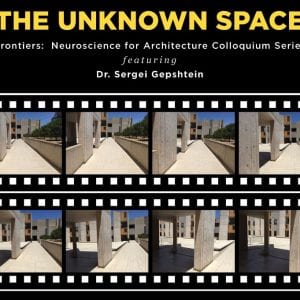
Continuing the Conversation on Neuroscience and Design with Dr. Sergei Gepshtein

For thousands of years around the world, the masonry tradition in architecture prevailed. Then in the 1920s, technologies emerged that gave us new ways of building with metal and glass. With this century’s advances in digital and scientific technology, we are discovering new ways of understanding design and architecture that could lead to a sea change in these fields.

Neuroscience, and what it can tell us about how people perceive and interact with design and architecture, is something we have been leading the conversation on for years. In November, we continued that dialogue with Dr. Sergei Gepshtein, who directs the Collaboratory for Adaptive Sensory Technologies at the Salk Institute for Biological Studies. A scientist working in the areas of perceptual psychology and sensory neuroscience, he is studying the intersection of architectural design, narrative design, and sensory neuroscience.

This field is so new that it’s a bit like solving a mathematical equation with multiple unknowns. You have to find a way to solve one of the unknowns so that you can get on with the work of the others. What I like about Sergei’s work is that he is as much in search of questions as he is in search of answers.

Many people share our interest in this work, which drew a strong local audience and an even larger audience online, including people around the world and PhD students working on dissertations. We are excited to be building a global community through our lecture series, Certificate for Neuroscience in Architecture, and our summer four-day executive course.

These are important opportunities for dialogue because one of the very real shifts in architecture has been toward evidence-based design and performative architecture. We have long believed that research into the mental state of the human being can change architecture, and that light, material, and space can affect people positively. This is at the heart of our human-centered approach.

Performative architecture makes us accountable when we make a claim, whether it is that adding skylights to a school will improve test scores or that window orientation in a hospital room will help patients discharge sooner. Neuroscience adds to the data we have that demonstrates our impact on the human experience.

Bringing Human-Centered Design to Life

By Tatiana Berger, Associate Professor of Architecture, Graduate Program, Chair of NewSchool Lecture Committee; Coordinator of the Neuroscience for Architecture Certificate Program

This year a very special guest spoke at the NewSchool of Architecture & Design Convocation on October 11: world-renowned architectural historian and critic Kenneth Frampton. Tickets for the free public lecture, Frampton’s first in San Diego, sold out in hours. Besides NewSchool faculty, students, and staff the lecture was attended by industry professionals and members of the public from throughout Southern California.

There are few people in the world who have had such a deep impact on all aspects of architecture, design, and city planning. Frampton, born in England, has worked as an architect, editor, critic, and architectural historian, teaching at Princeton since 1965 and Columbia University in New York, since 1972. He has published numerous articles and books. Design professionals in the auditorium commented: “I grew up reading Kenneth Frampton. The work of our firm is based on his writings”; “The lecture reminded me how much his thoughts about modern architecture have meant to me over the years. NewSchool should be congratulated for bringing such an accomplished speaker to our city. He is truly a legend.”

Frampton delivered an autobiographical lecture written especially for NewSchool. The lecture followed the historian’s trajectory over the last 50 years of his distinguished career, from published essays about the architect’s primary role as “builder” and the importance of regionally inflected tectonic culture, to current concerns about the responsibility of the architect and city planner in society. Frampton immersed himself in our NewSchool culture, speaking with faculty and students and taking care to understand our mission as an institution.

The following day, students had a chance to ask questions as part of a more intimate and informal event: a discussion session with Professor Frampton about selected themes from the lecture. This type of open forum reminds one of the historic conversations between Louis Kahn or Alvar Aalto and students. These are moments that stand out in our design learning experience and they are unforgettable. How exciting for our students to interact with such a great figure, who has defined perspectives on modern architecture from 1960 to this day.

Frampton’s visit to San Diego brought back memories of how I first met him in New York in 1991. I came to see him at Columbia University, where he had been professor and director of the PhD program in History and Theory for a number of years. His corner office was full of architectural models, books, and light. The room was always alive with conversation, whether it was Calatrava passing through New York with drawings or a model in his hands like a student awaiting a desk crit, or figures like Piano, Meier, or Tsien, coming in to say hello. Frampton delighted everyone with his warm and humble manner, his persistent desire to get through to the true meaning of things. Over the years, I spent many hours in that room talking about design and the social role of architecture. For me architecture became alive in these conversations.

Professor Frampton’s work and ideas have been an integral part of the NewSchool of Architecture & Design academic curriculum for years. We devote an entire quarter in Graduate Architectural and Urban Theory to the topic of “critical regionalism,” and instructors place a strong emphasis on the importance of tectonics and materiality in the design and production process. Human-centered design, an underlying theme in all of Frampton’s writings, continues to inspire and shape the pedagogy of our programs. After reading his work with NewSchool students, the real Kenneth Frampton was here, in front of us. Students commented: “I have read a lot of his texts, but the ideas sometimes seemed out of reach. Now that I have spoken to this elegant and brilliant man, I want to go back and look deeper to understand his philosophy about design.”

Kenneth Frampton was trained as an architect at the AA School of Architecture, London and subsequently worked as an architect in England, Israel, and the United States. From 1965 to 1972, he taught in the School of Architecture at Princeton University and thereafter he has served on the faculty of the School of Architecture at Columbia University in New York, where he remains Ware Professor of Architecture. His publications include Modern Architecture: A Critical History (1980), Studies in Tectonic Culture (1995), andLabour, Work & Architecture (2002) and Genealogy of Modern Architecture: Comparative Critical Analysis of Built Form (2016), among many others. Frampton is widely regarded as one of the world’s most distinguished scholars of modern architecture.

The Importance of Orchids and Onions to Human-Centered Design

One of my favorite San Diego events is Orchids and Onions. It is a fun event that raises funds for the San Diego Architecture Foundation, but it is also a real-world lesson in the importance of a human-centered approach to design.

This year, in addition to NewSchool being the title sponsor, I had the opportunity to be a juror. This gave me an in-depth look at the projects that earned an Orchid for making a positive contribution to the DesignMind in San Diego and those that deserved an Onion for not addressing the effect it will have on our community.

For example, one of the Onions in architecture went to a Starbucks. This building is placed so close to a prominent corner that it squeezes pedestrians on the sidewalk between traffic in its drive-through and six lanes of busy El Cajon Boulevard. What is the human experience of walking along the street with this kind of building?

Awarding an Onion isn’t just for venting about poor design choices. One Orchid winner admitted that the last time they were recognized at the event it was with an Onion. Sometimes getting an Onion inspires you to do better next time!

Of course, I much prefer to celebrate the Orchids. One that stood out for me is the preservation of the historic Hotel Churchill. It was built for the Panama-California Exposition in 1915 but had fallen into terrible disrepair. It is a beautiful old building that easily could have been developed into luxury condos or a boutique hotel. Instead it was redeveloped into affordable housing for the homeless. There are dedicated units for veterans who were literally taken off the streets to live in this building. Providing that kind of dignity for people who served our country is a marvelous example of what makes our city even better.

Civic and social responsibility is important to us. At NewSchool, we inspire and nurture design-minded learners to become citizen architects and designers, and that means being out in the public forum with your work. It is no accident that NewSchool and Orchids and Onions do that so well. One of the founders of Orchids and Onions is Michael Stepner, FAIA, FAICP, the acting chair of our architecture program. Our graduates are leaders in the San Diego Architecture Foundation, helped organize the event, and volunteered their time to make it a success. Our alumni also attended as part of teams receiving Orchids. Our students were there too, learning valuable lessons about the impact of human-centered design that they will use to improve communities in the future.

DesignMind: 5 Characteristics of the Human-Centered Approach

At our fall 2017 convocation, with our students and faculty gathered to reflect on our accomplishments and consider what the new academy year offers, I unveiled the guiding motto for NewSchool of Architecture & Design: Human Centered by Design.

The faculty did not come by this lightly. The human-centered approach emerged from a faculty retreat in September of 2016 to better define who we are. At that time, I shared that human-centered design is our northern star. I have also talked about the importance of citizen architects and designers.

At this year’s faculty retreat we articulated five characteristics that define the human-centered approach. These are:

It is never about the object. The sole pursuit of the object undermines and distances the human experience from design thought and amplifies the tension between the humanistic inquiry and the idealistic principles.

It is an approach that begins with critical thinking. Such an approach results from face-to-face interactions with people emphasizing values and getting a true feeling of daily life.

It is not the conveyance of a set process. The product of an education is the student. Therefore, it must be discovered from within the students where they begin, allowing them to frame the process.

It is about deep observation derived from understanding the situational context. In the classroom, this requires reflection on teaching and learning styles requiring the interaction and evolution of each.

It is about designing an educational path for students and a scholarly path for faculty. This approach is intended to foster a lively culture of discourse debunking myths and contradicting the herd mentality prevalent in so many schools, defining our community as thought leaders for the design professions.

The added expression, by design, declares that we have consciously chosen a path that places human activity ahead of abstract notions of form and theory in the evolution of project development. We do not reject the exploration of beauty; our wish as design professionals is to place this search it in its proper perspective.

We are making a clear statement that we desire to engage the human and environmental condition as a first priority of our actions. By doing this we are raising the bar of expectations for our design efforts. Design for us is not a noun, it is a verb. It is a way of seeing and doing that connects with the vitality of life.

Following the expression “human-centered” with the words “by design” specifically articulates how important we hold the critical and creative actions that comprise design thinking. For some, design thinking is misunderstood as a cacophony of free expression and the human-centered approach as an activity of speculation and specification listing.

Perhaps this interpretation is best explained as a revival of the of expression “form follows function.” At NewSchool, we understand the expression to be a disciplined process infused with the vitality of experience that leads to the golden moment when we begin to see processes, places and artifacts that do not yet exist.

I believe my grandmother had a more interesting interpretation of the word function. For her it was an event, as in a church function. Her interpretation of this word was vitally infused with place and human interaction guided by a greater belief in community and faith. This holistic understanding of the word function better reflects the intentions of a human-centered approach. It leads me to the conclusion that the best explanation for the expression Human-Centered by Design is that all design begins with the dance of life.

What does Human-Centered by Design mean to you?

How Long Does It Take to Become an Architect?

How Many Years Does It Take to Become an Architect?

It does take some time to become an architect. In 2012, the National Council of Architectural Registration Boards (NCARB) reported that architects took an average of 11 years to become licensed architects with independent or contracted practices within the industry. Unlike attending an interior decorator school or interior design program that is only two to four years long, it takes an architect much longer. Typically, this includes 5 years to acquire a first professional undergraduate architecture degree with an additional 3 years of professional internships to complete the Architecture Experience Program (AXP) requirements.

Depending on the curriculum and length of the program an architect chooses to enroll in as a student, school for an architect can take anywhere from 5 to 7 years. In addition to a rigorous and time-investing education track, the path to obtaining an architectural license also requires relevant hands-on experience accredited by NCARB, as well as several exam credentials.

Education Requirements

In order to become a licensed architect, students must earn their first professional degree in architecture. A first professional degree is a program accredited by the National Architectural Accrediting Board (NAAB). Typical NAAB accredited degrees include a 5-year undergraduate degree or a 3-year graduate degree.

If a student is interested in working in the field of architecture as soon as possible, some students may choose to complete a 4-year undergraduate degree that is not NAAB accredited. This option allows students to begin working in an architecture firm but does not allow them to pursue their architecture licensure. Similarly, graduate students with an undergraduate degree in an unrelated field may choose to complete a 2-year graduate architecture degree that is not NAAB accredited and begin working in the field.

For highly rigorous students looking for the fastest path to pursue their architectural licensure, some students may choose to pursue an Integrated Path to Architectural Licensure (IPAL) degree. This highly intensive degree program allows students to take their Architecture Registration Exams (A.R.E) and begin logging internship hours towards their Architecture Experience Program (AXP) requirements while they are still a student. There are currently only 17 colleges offering this type of degree in the U.S. including NewSchool’s IPAL Graduate Architecture program. The goal of pursuing this degree is to allow students to earn their licensure upon graduation. The master’s degree in architecture at NewSchool gives students with a bachelor’s degree in architecture or a related field the opportunity to earn a professional master’s degree in architecture and is recognized by the NAAB.

Contact our Enrollment Team to learn more!

Career Paths

After completing a NAAB accredited first professional degree, NCARB requires that those seeking licensure complete 3,740 internship hours as part of the Architectural Experience Program (AXP), formerly known as Intern Development Program (IDP). The purpose of this comprehensive internship program is to give candidates the skills and knowledge for independent architecture practice. This ensures protection of the public’s health, welfare, and safety, keeping practice parameters current with NCARB’s most recent program implementations that parallel industry regulations.

As soon as licensure candidates complete a NAAB accredited bachelor degree program, they are eligible to establish an NCARB Record to begin earning AXP credits. 3,740 experience hours in specific areas must be completed in order to receive credentials for the AXP, which include practice management, project management, programming and analysis, project planning and design, project development and documentation, and construction and evaluation. Approved directors and firms are on a list of AXP Guidelines that can be found on the NCARB website.

Examinations

The final step to earning architectural licensure is to complete a series of exams. The Architect Registration Examination (ARE) is a test of candidates’ abilities and overall knowledge of architecture practices and principles, used by all 54 U.S. Member Boards in order to be employed in professional architectural practice. Candidates must pass all ARE divisions within 5 years of completing their first professional degree, while some firms require an even smaller timeframe to complete them all.

There are a total of 7 divisions that make up the examination, which can be taken in any order. They are as follows: Construction Documents & Services; Programming, Planning & Practice; Site Planning & Design; Building Design & Construction Systems; Structural Systems; Building Systems; and Schematic Design. The test-taking formats vary by each category, giving candidates an array of different tactics to study and engage themselves in throughout their architecture curriculum and experiences in and out of school.

In preparation for these exams, the NCARB has exam guides for these seven divisions that are downloadable from the website and contain both multiple-choice questions and vignette questions. Free publications are also available regarding the most up-to-date ARE guidelines, which thoroughly explain how to complete the ARE step-by-step. This can be found on the NCARB website as well.

Architecture is a highly rewarding and sought-after career path. However, in order to succeed, individuals must receive the proper amounts of education and hands-on work experience, which typically takes around 8 to 11 years.

Before you decide on an architecture career path, many questions can cross your mind, like which accredited school should I choose?

Here are some reasons why you should choose NewSchool of Architecture & Design:

  • Top 30 in the World Master of Architecture program by Masterclass: Architecture. Guide to the World’s Leading Graduate Schools by Frame Publishers. (2014)
  • Top 25 Architecture Graduate Programs in the country by GraduatePrograms.com (2014)
  • Top 10 undergraduate architecture schools in the western United States by DesignIntelligence in its publication “America’s Best Architecture & Design Schools” (2012/2013)
  • Top 5 schools in the U.S. setting “The Future of Design Education: Teaching Innovation” by Interior Design Magazine (2013)
  • First in awarding master’s degrees in architecture to women among 10 NAAB-accredited schools in California. (Source: Integrated Postsecondary Education Data System, 2010)
  • First in awarding master’s degrees in architecture to Hispanic/Latino students among 10 NAAB-accredited schools in California. (Source: Integrated Postsecondary Education Data System, 2010)

Learn about NewSchool’s bachelor’s and master’s degree programs today. Contact our Enrollment Team to learn more! Or if you are interested in one of our related programs, discover how to become a graphic designer here.

Graphic Design & Interactive Media Career Paths

Career Paths for the Graphic Design & Interactive Media Graduate: Exploring The Possibilities

With so many professional possibilities to explore as a media designer or graphic design, it’s no wonder this career path continues to grow in popularity for undergrads in the digital media arena. From a creative career in the entertainment and advertising industries to attaining a design job in science or healthcare that specializes in communication, there are plenty of media design careers available to the skilled media designer.

What Is the Role of A Graphic Designer or Interactive Media Designer?

As a graphic designer or interactive media designer, your tasks are varied, including a host of multimedia applications. Your primary responsibility involves the communication of information, messages, and/or entertainment through different digital and print mediums.

Besides creating 2-D and 3-D images and computer graphics, your role may also entail creating models, animations for film and video, digital illustrations, and even special effects, depending on the specific area you pursue. In turn, your designs will be utilized in an array of integrated media platforms, including but not limited to the internet, television, film, mobile technologies, and any other visual design platform.

Graphic designers and interactive media designers may also find their visual design work featured in more traditional channels, including newspapers, manuals, brochures, and other printed collateral. In general, your role will encompass the design of a visual presentation of some sort, whether it is used for entertainment purposes (such as the film industry), or for product enhancement, where your graphic design skills are being applied as a means of visual communication.

What Skills Do I Need To Become A Graphic Designer or Interactive Media Designer?

For those who are considering a career in graphic design or interactive media design, it’s important to be aware of the skills and resources needed to succeed. A fluency in computer software and coding is essential, as well as an intermediate/advanced level of proficiency in both Windows and Mac computer systems.

If you’re exploring a career as a UX designer, UI designer, or a career in interactive web design, a working knowledge of programming languages such as HTML (Hypertext Markup Language), XHTML (Extensible Hypertext Markup Language) and CSS (Cascading Style Sheets) is fundamental. Because nearly all web-based animation is created using Adobe Flash, you will want to become familiar with this program.

In addition, becoming adept at both Adobe Illustrator and Photoshop is key for anyone pursuing a career in the digital media arts. In addition to a high aptitude in computer technology and graphic design software, your creative, artistic, communication and organizational skills are crucial to your professional success once you enter the workforce.

In order to determine if a graphic design career path or one in interactive media design is the right fit for you, here are a list of pros and cons:

PROS & CONS of a Career in Graphic Design or Interactive Media Design: How To Become A Graphic Designer or Interactive Media Designer

  • Digital media is a creative career allowing for creative expression
  • Your design work may be seen by a large audience
  • There are vast opportunities for advancement and growth within your field
  • BLS statistics show that web design, UX design, UI design, and related fields will see an increase in growth within the next ten years
  • A demanding schedule including deadlines can be stressful
  • If you’re a freelance graphic designer, you must find your own work and maintain a steady flow of clients to remain financially stable
  • In order to be successful (as a freelancer or full-time staff member), your schedule must cater to the client
  • Because graphic design software and design technologies are constantly changing, you must remain up-to-date and constantly abreast of trends & tools within your industry

If you’re interested in becoming a graphic designer or pursuing a profession as a media designer, there are several ways of obtaining your goal. You may want to consider a 4-year graphic design and interactive media program geared specifically towards digital media design. In order to proceed, you’ll first need to have a high school diploma or equivalent before applying to colleges of your choice.

Once you’ve been accepted, your coursework will focus on image design and manipulation, web design and website maintenance, 3-D modeling, and digital video editing, as well as other computer software programs and digital tools.

Additionally, those enrolled in a bachelor’s degree design program can expect a combination of specialized classes and real-life, hands-on experiences to prepare them for the job market, including internships or similar opportunities.

In some instances, your bachelor’s program may require a senior design project, which can be used later on within your design portfolio as a representation of your work. In addition to becoming an expert in your field, building a strong design portfolio during your college years is imperative for your post-grad job search. For those who wish to seek a higher salary range and further their education, there are also master’s degree programs in graphic design, digital media, and animation. According to the U.S. Bureau of Labor Statistics (BLS), the digital media design industry is expected to experience an on-average job increase from 2014-2024. Computer graphic design positions can anticipate growth within the expanding mobile technology market, while the consumer demand for movies, video games, special effects and 3-D animation are also accountable for some of the projected growth within the job forecast.

Looking Ahead: Job Forecast For Graphic Designers or Interactive Media Designers

Due to the booming demands of our digital age, there are a variety of design positions within the animation, film, television, web, mobile technology, and video game industries.

Additionally, research has shown that employment may also be sought in alternative areas, such as law, medicine, science, architecture and business, where media designers assist in the enhancement of products and modes of communication within said industries.

It is also anticipated that between 2014-2024, employment for all art and design workers can expect a growth rate of 2%. Statistics show that the stagnation in employment growth within the industry was largely in part due to companies hiring labor from outside of the US. According to the BLS, multimedia artists and animators (which include digital media designers) earned a median annual wage of $63,970 and a median hourly wage of $30.76 (www.bls.gov) in 2015. Payscale.com also reports that the annual salary for a digital designer ranges from $38,633-$81,041 as of October 2016.

For more information about the Bachelor of Science in Graphic Design & Interactive Media program at NewSchool, contact our Enrollment Team.

DesignMind: Teaching Architecture and Design in a Changing World

Teaching Architecture and Design in a Changing World

At NewSchool, our lecture series attracts exceptional scholars and practitioners from around the world. Sometimes, however, the most vital speakers are right here on campus—our faculty. Although students get to hear from them on the subjects they teach, it is important for everyone on campus to understand their scholarship so that we are fostering collaboration and creating opportunities for our students.

Recently, we got to hear from our own Vuslat Demircay, Ph.D. She has been teaching here since 2003, focused on studio and research, and she is the recipient of our 2010 Presidents’ Award. She spoke to students and faculty on the topic of “Response to Change: A Pedagogic Approach,” which she has been researching for several years. The topic is important, because the world is changing rapidly. There are social and environmental issues we need to pay close attention to, including population growth, climate change, and social and economic justice.

Not only must the practice of architecture and design change, but also how we prepare students for these professions. We have to define the roles and responsibilities accordingly. We also need to emphasize critical thinking as well as technical skills so that students develop into citizen architects and designers who can design both to the specs of the project and to the needs of society.

Some would argue that education should follow the practice of what’s happening in the industry. But Demicray and I agree that education should lead the profession. That is what we are doing at NewSchool, through our emphasis on providing international experiences, engaging students in community projects, and, of course, being guided by our north star—human-centered design.

DesignMind: 5 Distinguishing Characteristics of a Professional

In June, I had the honor of preparing remarks for the 98th Annual Business Meeting of the National Council of Architectural Registration Boards (NCARB). NCARB is responsible for the licensure of architects and has taken innovative steps to improve that process with the Integrated Path to Architecture Licensure. IPAL allows select institutions, including NewSchool, to offer accelerated programs so that students can be prepared to pursue licensure upon graduation.

Here is a condensed version of my message to NCARB:

What gives us credibility and value in the eyes of the public, potential clients, and those who will live, work, and worship in buildings and places designed and realized by architects? Over the course of many discussions with my very good friend Patrick Sullivan, former Chair of the Department of Architecture at California State Polytechnic University, we determined five distinguishing characteristics of a professional:

1. An Advanced/Recognized Education Experience

Every individual who chooses to study a profession must have the burning desire within themselves to pursue an education. The bedrock of respect that underlies the profession is dependent on a vital culture of exploration and design thought within the academy. The complexity of our time, the increasing complexity of our tools, and the rising expectations for professional service demand a rich, measured education experience. It is true that there are many alternate sources of knowledge to inform an individual. However, what is necessary is the intensely personal experience of an architectural education that has itself been rigorously assessed by a diverse group of peers from education, practice, and the public sector.

2. A Proper, Rigorous Internship Experience

There is much in practice that simply cannot be simulated or mimicked in the academy. The logistics surrounding a major project are staggering when taken out of the context of a highly qualified professional team. A rigorous learning experience within the structure of an office allows for the continuum of academy to practice to flourish. IPAL gives greater exposure to professional preparation through additional coursework that matches in-office experience. It stimulates the motivated student to complete curricular work and address the licensing exam years ahead of the present average. Because of the shadowing and internship experiences, partnerships between offices and schools are increasing, further enhancing the desired goal of bringing the academy and practice closer along the continuum.

3. The Accomplishment of Licensure Along with a Responsibility for Continuing Lifelong Learning

Many years ago, as a recent graduate, I wondered about the value of licensure. I was convinced that I could operate outside of the system. I soon learned that licensure was actually liberating. It was a capstone achievement that validated my education and it forced me to sum up my experience in practice. It became clear to me that it defined me and validated me as a professional with real responsibilities for the health, safety and welfare of people. It became my proof of the value of my work to the public. Because the process toward licensure is a milestone that ultimately validates the education and practice of the individual, both the academy and the office must take responsibility for mentoring and guiding the individual to licensure.

4. Voluntary Membership in a Professional Association Along with the Voluntary Acceptance of a Code of Ethics

Voluntary membership in a professional association opens opportunities to identify and interact with like-minded peers. This is a tradition that extends well into Western history through a system of guilds and clubs. Knowledge communities work to advance the body of information available to the profession through the sharing experiences, related scholarship and case studies from practice.

As important as voluntary membership in a professional association is, it is equally important to commit to the voluntary acceptance of a related code of ethics. The ethical conduct of the profession is dependent on the personal commitment of every member to a shared system of beliefs and implies that buildings will have a powerful consistency focused on human-centered design.

5. The Commitment to Pro Bono Activity Even as it May Lead to New Forms of Professional Activity

Truly, one of the most important aspects of a professional life is the understanding of the necessity of a commitment to the less fortunate of our society. As architectural professionals, we are more than architects. We are citizen architects and designers. It is activity that broadens our understanding of the world while we see to the quality of life, the public welfare, of even the most underserved among us. I believe that giving returns ten-fold to the profession. It increases our value to society because we have first demonstrated our value. It moves us to think beyond traditional roles for our critical and creative abilities. Our commitment beyond ourselves calls upon our better nature.

The common ingredient among each of the five marks of a professional is the unyielding commitment to raising the standards of the profession. This must be our shared commitment irrespective of the perspective we bring to this discussion. It will be foundation of the respect we have for each other and it will give us reason to trust each other.

DesignMind: Napkin Sketches

On May 19, NewSchool’s chapter of the American Institute of Architecture Students hosted its annual Napkin Sketch auction. The event raised $3,800 to help students attend industry conferences. This year, there were 36 sketches contributed by 20 architects, including NewSchool president Marvin Malecha, who contribute five. Here he shares his perspective on napkin sketches.

The napkin sketch holds a hallowed place in design history. It is a medium that is at once frivolous and the carrier of sublime design ideas. The paper napkin is ephemeral. It is a fragile medium best suited to ideas of the moment. In the course of a design project it becomes tempting to use whatever means possible to convey or record an idea. It is therefore important to understand the bias of the individual who is drawn to such a medium.

I have my own experience with a seminal design idea recorded on a drink napkin that guided the work of a team through a complex client community. The sketch became an informal/formal basis of agreement regarding the progress and direction of the Chancellor’s residence at North Carolina State University after a lengthy and sometimes uncomfortable search for the right expression. However, for me this use of a napkin sketch is an anomaly. I have a hierarchy of papers and pencils that demark the exercise of sketching on a substantial pad, to more professional communications recorded in a notebook. The napkin sketch is an exercise of folly and free daydreaming. Please do not misunderstand me: free daydreaming is one of the most important regular exercises that a creative individual can undertake.

This is the best way to describe the sketches titled “Temple to Wishful Thinking” and “Beach Folly.” Both sketches are simple musings about life and site, the sacred and the inconsequential.

The pursuit of the idea of sacred is represented in the sketch titles as “Path to a Sacred Place.” This sketch is a bit more intense than the first two in that it represents the uphill struggle, often in less than ideal places, to achieve the sacred as it is represented as the bright light at the end of an uphill journey. The bright light recurs in my daydream sketches. It is my belief that the better is always ahead even though great darkness must sometimes be traversed. This optimism is reflected in the titled greeting the sky. The tower reaching out of the darkness, like the light at the end of the path is an expression of optimism.

The final sketch, “’Interwoven Trees’ of Life,” is a frequent exploration for me. It is an ancient symbol of family and the strength derived from a mature family unit. The natural forms derived from the tree trunks interwoven to carry a unified tree canopy is nature’s way to dramatically illustrate the model for the human family.

Is the napkin sketch folly? Yes. But it is through free exploration that folly provides that serious subjects may be pursued. Like staring out of a classroom window drawn to the miracle of a spring day, folly is after all serious business.

*